



 216 / 308

216
Safe Embedded Systems
Supervisory Control Theory
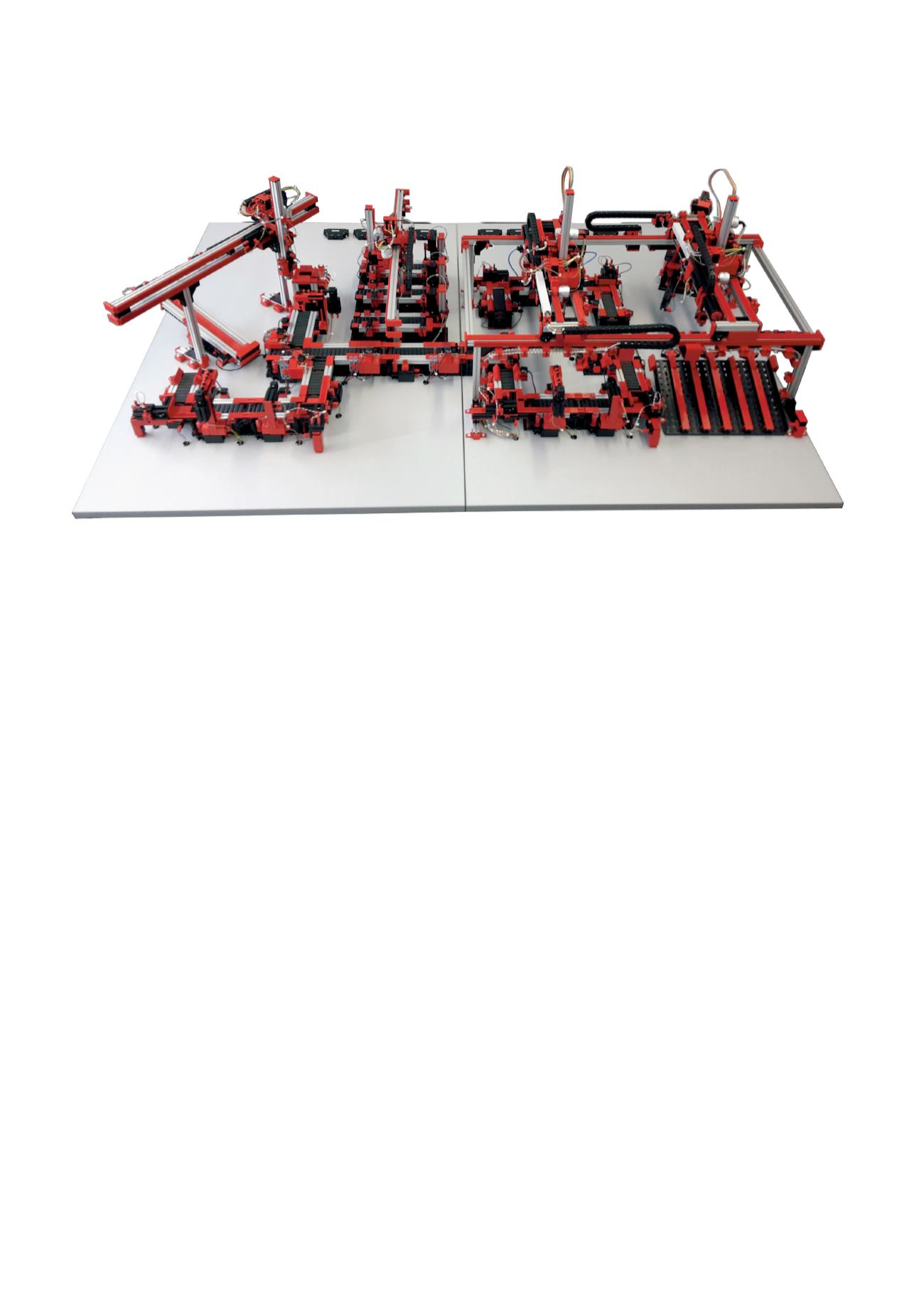
Didactic platform – supervisory control theory applied to production automation
Supervisory control theory (SCT) is a model-based
approach that permits the automatic generation of
correct-by-construction supervisory controllers. Thanks
to the SCT approach, which uses mathematically proven
algorithms, generated controllers do not need to be veri-
fied anymore. The designers can then focus more on the
requirements definition and the specification modeling. A
set of specifications permits each requirement (functional
and non-functional requirements, safety and liveness
requirements, optimization criteria, etc.) to be specified
independently. Then, synthesis algorithms are applied on
the set of specification and plant models to generate a
supervisory controller. The supervisory controller obtained
is then guaranteed to be deadlock-free and maximally
permissive (all the specifications are fulfilled and only
these specifications are fulfilled).
In 2017, SES further investigated the obstacles to a wide
application of SCT in industry.
Robust diagnosis for Ambient Assisted Living
According to the World Health Organization, the world’s
population percentage of people aged over 60 is expected
to double in the next decades; it will increase from 12%
in 2015 to 22% in 2050. Ambient assisted living (AAL)
integrates sensors in an unobtrusive intelligent way that
can track the health status of elderly people at home and
detect early signs of diseases by monitoring their activities
of daily living.
SES is working on the development of reliable AAL meth-
ods that are capable of monitoring elderly people without
intruding into their lives. An important aspect of the
reliability of such systems lies in the capability of handling
sensors’ faults. Indeed, a fault in one of the sensors of the
AAL could lead to misleading results in activity recogni-
tion. In emergency situations, this could have dramatic
consequences for the health of the inhabitant.
Project
■■
Robust Diagnosis for Ambient Assisted Living (DAAD)
First, a formal approach using a signal-based formalism
was investigated. This aimed at reducing the gap between
the classical event-based approach of SCT and industrial
applications using signals and dataflows to represent and
exchange sensor and actuator values.
Secondly, SES also investigated the integration of SCT
methods in a broader systems engineering perspective.
The goal is to establish good practice and business
rules to simplify the application of SCT in the production
automation industry.
Projects
■■
A Signal-Interpreted Approach to Supervisory Control
Theory (internal)
■■
Application of Supervisory Control Theory to the
Production Automation Industry (internal)