



 254 / 308

254
Metal Forming and Casting
Process and material qualification for metal forming, blanking and casting
The Chair of Metal Forming and Casting (utg) focuses on the three production processes: casting,
blanking and metal forming. In 2017 over 40 scientists worked at the institute on research projects
which vary from fundamental research to industrial application.
Virtual production and simulation
Process stability and capability
New technologies and
processes in the field of
casting
New technologies and
processes in the field of
blanking
New technologies and
processes in the field of
metal forming
Casting
solid-state joining techniques is based on a cold welding
process to establish adhesive bonding. Therefore, exten-
sive chemical, thermal and mechanical preparation of the
bonding partners and post-treatment of the compounds
are required to ensure the formation of a suitable bonding.
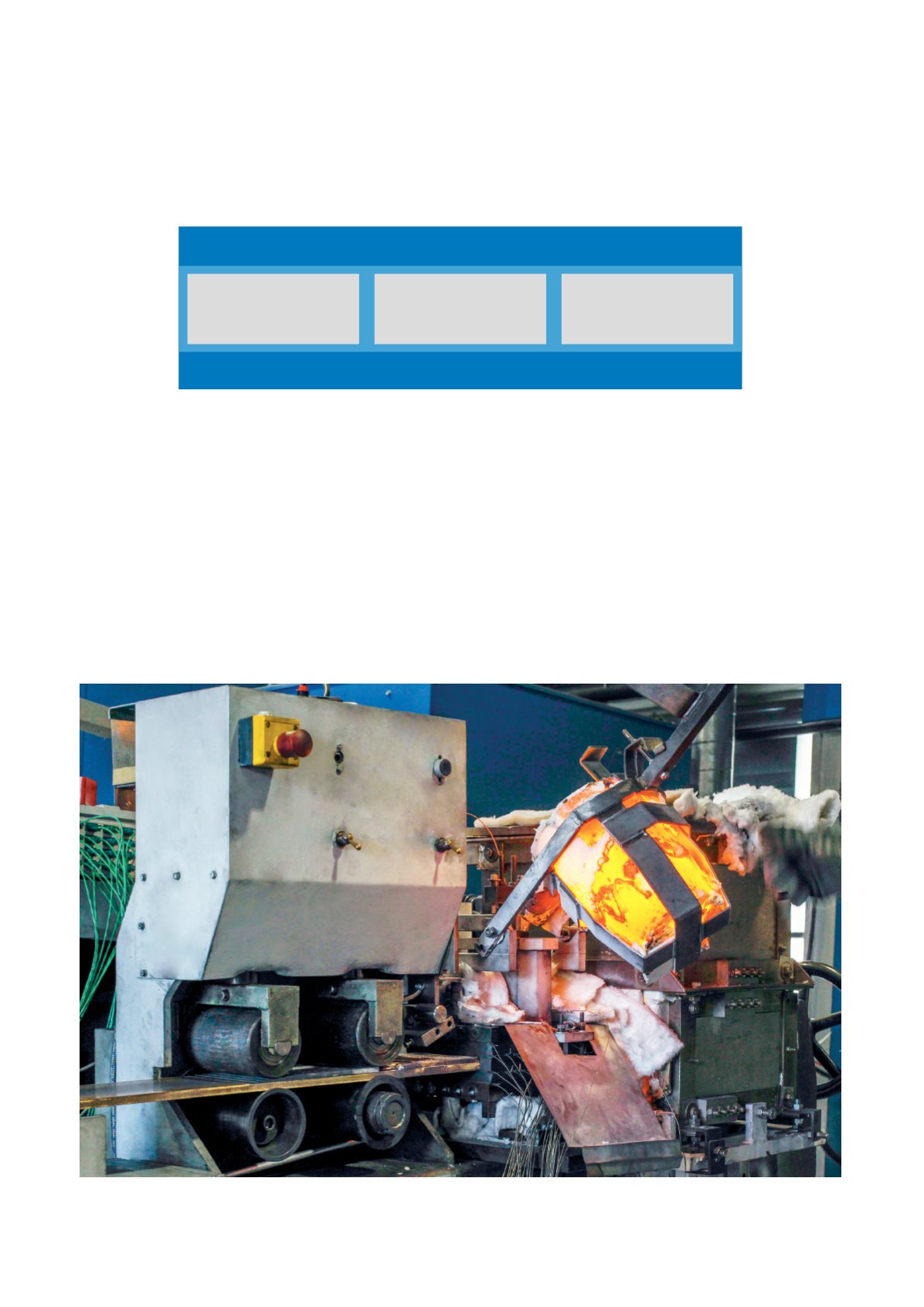
Horizontal continuous compound casting of copper mate-
rials could be an adequate alternative to this energy- and
resources-consuming processes. Thus, it will be possible
to replace the chemical and mechanical preparation of
the bonding surfaces and increase the output by reducing
Horizontal continuous compound casting
The research group ‘Casting’ focuses on:
■■
Molding materials
■■
Residual stress analysis and material characterization
■■
Tooling technology for (high pressure) die casting
■■
Continuous and composite casting
Copper composite materials are used in many technical
applications today. These compounds are produced
mostly by joining of the basic materials, especially via roll
bonding processes. The bonding mechanism of these