



 255 / 308

Metal Forming and Casting
255
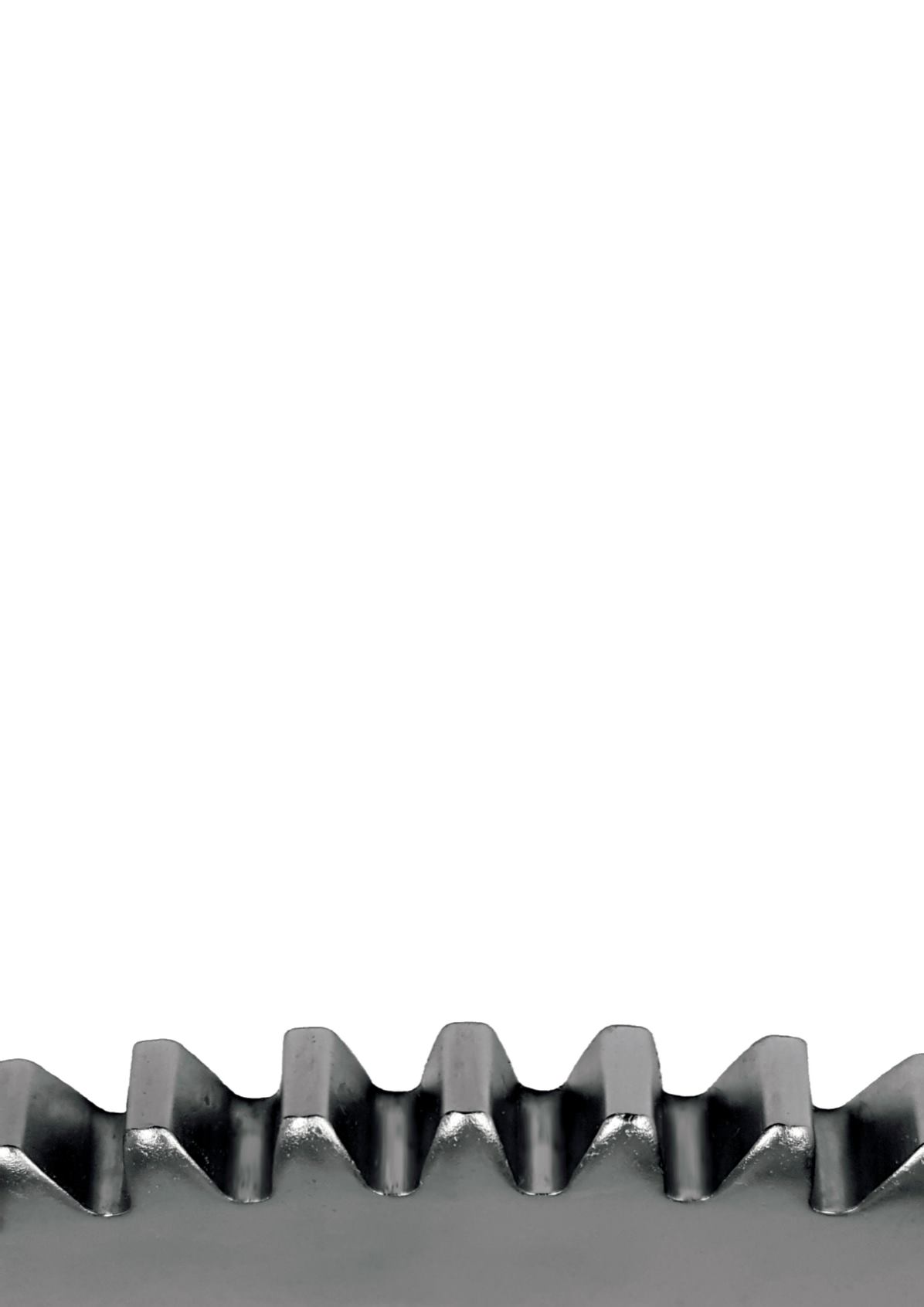
Gear manufactured by a NNSBP
cracking of higher-strength alloys, which can occur in roll
processes.
Furthermore, the utilization of the casting heat of the
substrate results in conservation of energy, because no
additional thermal pretreatment is necessary.
Therefore, the producibility of continuous composite
casting of selected copper alloys needs to be qualified in
this joint research project in cooperation with industrial
partners.
First the required conditions to achieve a proper metal-
lurgical bonding between the copper alloys have to be
determined by means of static composite casting experi-
ments using sand moulds and permanent moulds. Based
on the results of the basic composite casting experiments,
the continuous casting process is established. Therefore,
the horizontal continuous casting device located at the
utg
is modified. Numerical simulations are applied to design
a composite mould system which is integrated into the
existing continuous casting equipment.
Thereby, the comprehension of the correlation between
the quality of the compound and the casting conditions
is gained. Furthermore, the numerical simulation of the
casting process has to be validated to help industrializing
the new process in the future.
Projects
■■
Incremental Casting – The Generative Droplet-based
Manufacturing of Parts Using Aluminium Alloys (DFG)
■■
Opti Alloy – Mechanical Strength Calculation Based on
Microstructure (BFS)
■■
In-situ Straing Measurement During the Solidification of
Aluminium Alloys Using Fibre Bragg Gratings (DFG)
■■
μ-Kern – Microstructure-based Method for Calculating
Technological Properties of Inorganic Bounded Sand
Cores (DFG)
■■
Energy- and Material-efficient Production of Copper-
composites Using Horizontal Continuous Casting (DBU)
■■
Casting and Characterization of Cu-Al-bilayer Compos-
ites (DFG)
■■
FORPRO² – Efficient Product and Process Develop-
ment by Knowledge-based Simulation (BFS)
■■
In-situ Measurement of Deformation Induced Formation
of Martensite in Austempered Ductile Iron (DFG)
Blanking
The increased demand for lightweight constructions in
industrial production requires the design, manufacture,
and use of application oriented components. Forming and
blanking processes have many advantages over machin-
ing processes like optimized productivity and a fiber
orientation which is adapted to the specific task. The latter
results in increased mechanical characteristics and fatigue
strength of formed metal components.
However, residual stresses greatly influence the per-
formance of components manufactured by forming or
blanking procedures. The state of residual stress is mainly
responsible for component failure, especially under cyclic
loads. For this reason, residual stresses are currently
considered as highly unfavorable and as having a negative
impact on a component’s feasibility.
Efficient models and experimental testing equipment for
operational stability have already shown promising results
for the potential usefulness of internal stresses. The
control and alteration of these stresses in order to achieve
a positive impact on relevant characteristics of compo-
nents manufactured by forming or blanking processes is
the objective of the DFG priority program 2013, which is
coordinated by the Chair of Metal Forming and Casting.
Among these manufacturing processes, near-net-shape-
blanking processes (NNSBP) are one possibility to
produce functional surfaces in an economic way. These