



 144 / 308

144
Turbomachinery and Flight Propulsion
Systems and Cycles
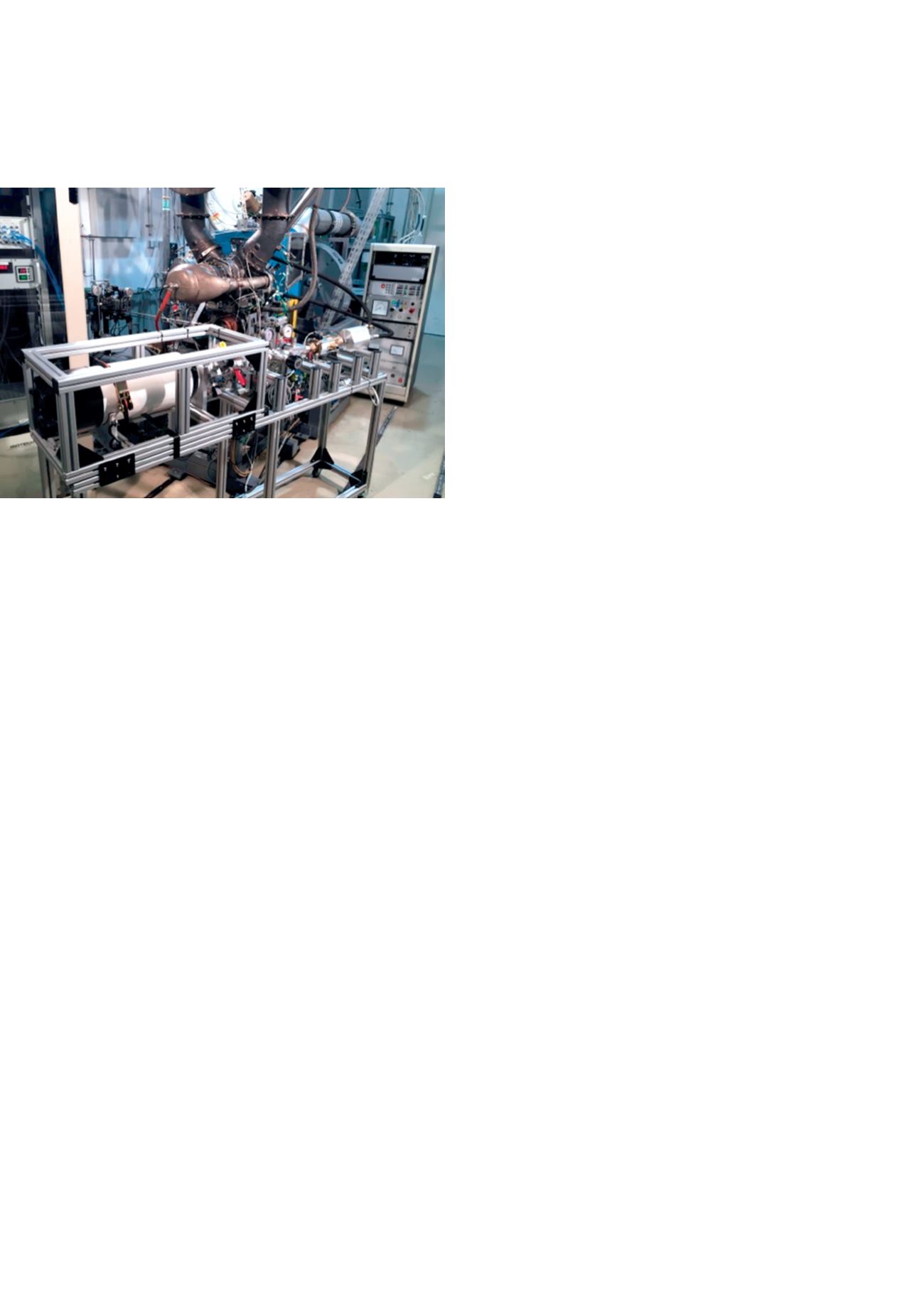
Allison 250 helicopter engine test bed including a quick start system
This main area of research at the institute is dedicated
to future advanced performance cycles as well as novel
overall architectures of gas turbines and aero engines.
In this field investigations are carried out with respect to
potential improvements of overall engine characteristic
parameters, such as fuel burn, weight-to-power ratio,
propulsive efficiency and thermal efficiency. As engine
architecture and performance are increasingly complex,
‘smart systems’ as well as variable geometries will be
essential to allow the high degree of control, which is
necessary to operate future engine in a stable and efficient
way across the entire flight envelope. Part of the current
research is concerned with improving the starting time of
helicopter engines in order to allow a significant increase
in single-engine operation. The quick start system is
based on the concept of injecting high momentum air at
supersonic conditions into the outer portion of the radial
compressor of the engine. It is tested on the institute’s
Allison 250 testbed. The novel system allowed a reduction
in the starting time of the engine from approximately
25 seconds down to 2 seconds. With this, a much more
advantageous management of the two engines in a
helicopter has become available. Currently functionality is
improved and the quick start system modules are being
further developed with respect to their reliability and future
use in a real helicopter environment.
Projects
■■
Konzeption und Erprobung eines Schnellstartsystems
für Hubschraubergasturbinen am Beispiel der Allison
250 (2013-2017, LTF PV)
■■
Numerical Investigation of Compressor Stator Shroud
Leakage Effects (2017-2018, IA)
■■
Flame Stabilisation in Supersonic Combustion (2013-
2017, LTF PV)