



 142 / 308

142
Turbomachinery and Flight Propulsion
Propulsor Technologies
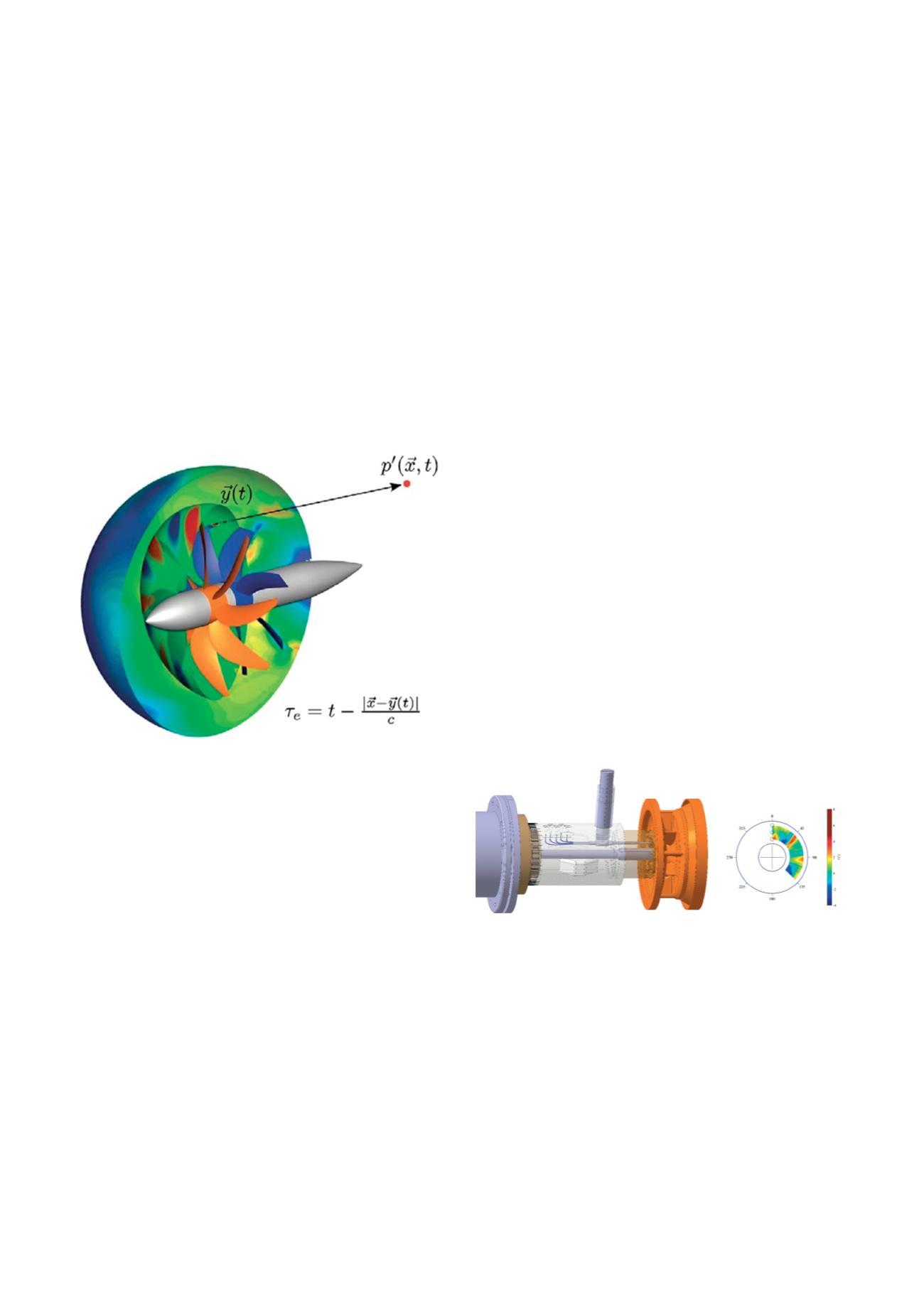
Intake model and measurement set-up (left) and sector pressure
measurement (right)
configurations and new stage concepts. The envisaged
date for commissioning of this facility FRANCC (Fun-
damental Research and New Concepts Compressor) is
2020. Stability enhancement on compressors is an area
of research, which the institute has been pursuing since
year 2000 with great success and recognition. More than
one concept has been developed and matured to be
ready for application in tomorrow’s turbomachinery.
Projects
■■
Experimental Investigation of Variable Geometry on a
Axi-Centrif Compressor (2015-2018, IA)
■■
Experimental Investigation of Stage Matching and
Tip Clearance Effects in an Axial Compressor
(2015-2019, IA)
■■
Erhöhung der Leistungsdichte zur Reduzierung der
Stufenzahl durch Impulsausblasung und Einsaugen
(2015-2018, AG Turbo, Cooreflex, Vorhaben 1.1.6)
■■
Integrale Auslegung einer Hochdruckverdichterstufe mit
Gehäusestrukturierung (2016-2019, Lufo V2, AeroEtaT)
■■
Conceptual Design and Build of a Large-Scale Low-
Speed Research Compressor Rig (2017-2020, LTF PV)
■■
Compressor Off-Design Operability (2017-2020, EU,
TurboReflex, WP1)
Hybrid high-fidelity acoustic simulations on a counter-rotating propulsor
Driven by the multi-disciplinary nature of designs for future
gas turbine-driven as well as electrically-driven propulsors
(fans or front rotors of stationary systems), research in this
field is focused on novel blade design, which is needed to
further improve propulsive efficiency and reduce noise in
ducted and open rotor configurations. Also, the aero-
dynamic integration with an intake, which in the case of
integrated engines also requires consideration of bound-
ary layer ingestion, is a key research topic. In particular in
flying turbomachinery applications there is significant and
increasingly strong inlet flow distorsion present when it
comes to novel highly integrated aircraft-engine designs.
Therefore, the response of compression components and
whole gas turbine systems to severe flow field distorsion
and boundary layer ingestion is a key topic in current
and future research, carried out on a whole helicopter
engine, individual compressor components, or most
simply in a wind-tunnel arrangement. On the numerical
side, capability is strongly built up to carry out large-size
high-fidelity simulation of the time-dependent unsteady
flow in advanced blade row configurations, aimed at future
propulsor applications. In the future, research will also
be carried out in the associated fields of engine/airframe
integration, and novel distributed propulsion concepts.
In an ongoing project the nature and impact of pressure
and temperature inlet distortion on the performance of
a helicopter propulsion system is experimentally investi-
gated. Measurements are taken on a scaled wind tunnel
model of the real intake geometry for a matrix of pressure
and temperature distorsion patterns in order to determine
distorsion transmission and performance characteristics
of the intake. Once these are completed the project can
proceed carrying out full engine system distorsion tests on
one of the LTF helicopter engine test beds.
Projects
■■
Contoured Endwall Design in High-Lift Propulsor Blade
Row Configurations (2017-2020, LTF PV)
■■
Numerical Investigation of the Unsteady Flow Behavior
in Tandem Compressor Vanes (2017-2020, LTF PV)
■■
Rotorabwindinteraktionen am Triebwerkseinbau (2016-
2019, Lufo V2, CHARME, AP 2.3)