



 133 / 308

133
Mechanics and High Performance Computing
Functional Modeling of the Heart and an Extravascular Assist Device (VAD)
Due to the decreasing number of transplantable hearts
and deficiencies in current heart-assist device technolo-
gies, novel concepts for extravascular heart assistance
are developed in close collaboration between AdjuCor
GmbH and MHPC.
The collaboration aims at minimizing vulnerable impact
to the heart and optimizing design and functionality of a
novel device by use of computational models. Therefore,
computational models of the heart, the vascular system
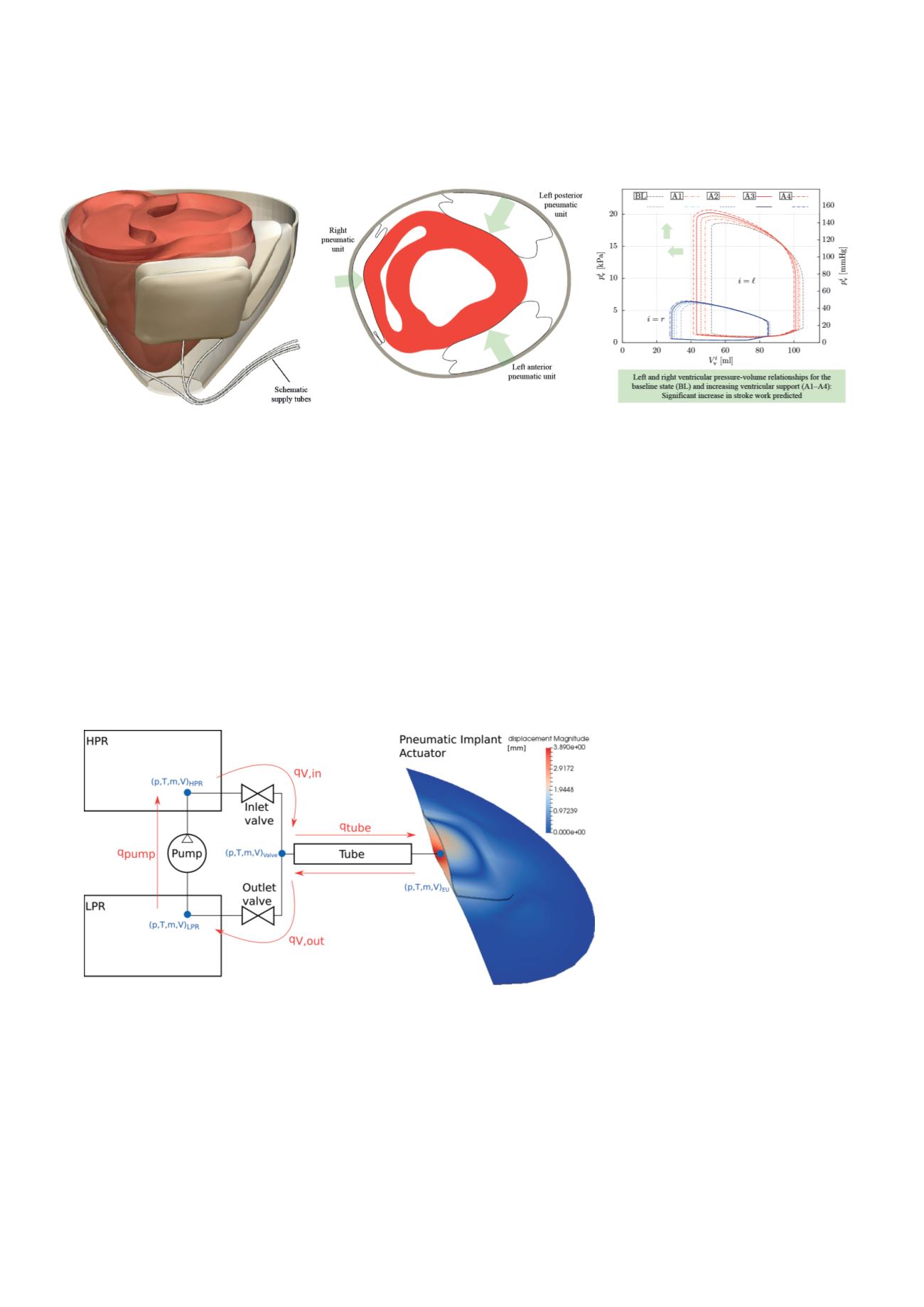
3D-0D coupled model of the heart, systemic circulation system and vascular assist device
and a novel epicardial augmentation device are developed
and their interplay computed on patient-specific cardio
vascular conditions in order to predict the increase in
heart work required to maintain vascular perfusion.
Furthermore, models of oxygen transport and ventricular
disease progression after myocardial infarction should
help to gain further insights into the specific device oper-
ating parameters required to sustain cardiac regeneration.
Multi Objective/Field Optimization of an Extravascular Assist Device (VAD)
Faster rescue chains and especially improved clinical
diagnostics and therapies have reduced the number
of lethal heart infarcts. More patients survive but suffer
from a resulting heart insufficiency. At the same time,
heart transplantations are limited to the amount of donor
organs, which has been declining during the past decade.
A promising technology is efficient cardiac assist devices.
Coupling of 0D technical model
to a 3D implant model
However, the wide range of patient individual requirements
makes it challenging to design an appropriate device.
Together with AdjuCor GmbH, we develop an 0D model of
the driving unit of a novel VAD and couple it
to a 3D patient-specific heart model. This allows us to
iteratively optimize device and implant in order to meet the
individual patient needs.