




 174 / 308

174
Continuum Mechanics
Physics-constrained, Data-driven Discovery of Coarse-grained Dynamics
ing simultaneous dimension and model-order reduction
(Figure 4). It consists of a component that encodes the
high-dimensional input into a low-dimensional set of
feature functions by employing sparsity-enforcing priors
and a decoding component that makes use of the solution
of a coarse-grained model in order to reconstruct that of
the full-order model. Both components are represented
with latent variables in a probabilistic graphical model and
are simultaneously trained using stochastic variational
inference methods. The model is capable of quantifying
the predictive uncertainty due to the information loss that
unavoidably takes place in any model-order/dimension
reduction as well as the uncertainty arising from finite-
sized training datasets. We demonstrate its capabilities in
the context of random media where fine-scale fluctuations
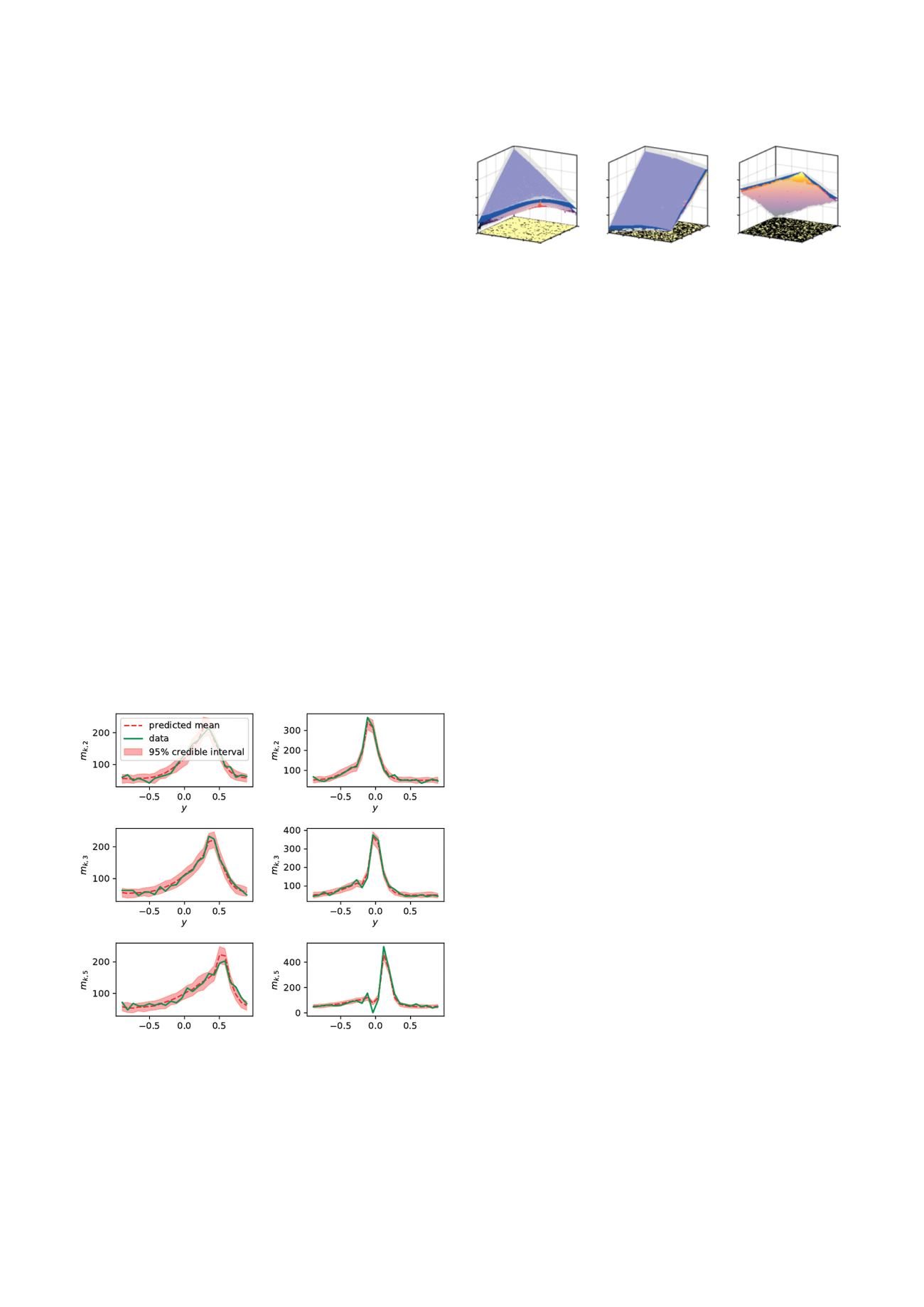
Figure 6: Illustration of the predictive capabilities of the proposed model
for the one-dimensional Burgers’ equation. The left-hand and right-hand
columns correspond to two different initial conditions and the rows repre-
sent snapshots of the system at different time instances. The green dashed
line represents the true time evolution of the system. The red shaded area
is the predicted 95 percent credible interval and the red dashed line the
predicted mean.
This project is concerned with the discovery of data-
driven, dynamic, stochastic coarse-grained models from
fine-scale simulations with a view to advancing multiscale
modeling. Many problems in science and engineering are
modeled by high-dimensional systems of deterministic
or stochastic, (non)linear, microscopic evolution laws
(e.g ODEs). Their solution is generally dominated by the
smaller time scales involved, even though the outputs of
Figure 5: True solution (colored), predictive mean (blue), one standard
deviation (transparent gray)
can give rise to random inputs with tens of thousands of
variables. With a few tens of full-order model simulations,
the proposed model is capable of identifying salient phys-
ical features and produce sharp predictions under dierent
boundary conditions of the full output which itself consists
of thousands of components (Figure 5).
interest might pertain to time scales that are greater by
several orders of magnitude. The combination of high-
dimensionality and disparity of time scales has motivated
the development of coarse-grained (CG) formulations.
These aim at constructing a much lower-dimensional
model that is practical to integrate in time and can ade-
quately predict the outputs of interest over the time scales
of interest. The challenge in multiscale physical systems
such as those encountered in non-equilibrium statistical
mechanics, is even greater as apart from the identification
of an effective model, it is crucial to discover simultane-
ously, a good set of CG state variables.
In this project, we treat the CG model as a probabilistic
state-space model where the transition law dictates the
evolution of the CG state variables and the emission law
the coarse-to-fine map (Figure 6). Naturally, one of the
most critical questions pertains to the form of the CG
evolution law which poses a formidable model selec-
tion issue. Correct identification of the right-hand side
terms involved can also reveal qualitative features of the
coarse-scale evolution such as the type of constitutive
relations. In order to avoid overfitting as well as endow the
estimates with robustness even in the presence of limited
data, we invoke the principle of parsimony that is reflected
in the sparsity of the solutions.